
Our Award Winning Provision for Maths

The Basic Skills Quality Mark is an award that celebrates and supports continuous improvement in English and Maths. It is awarded to a setting or school to recognise their provision, practice and performance in English and Maths.


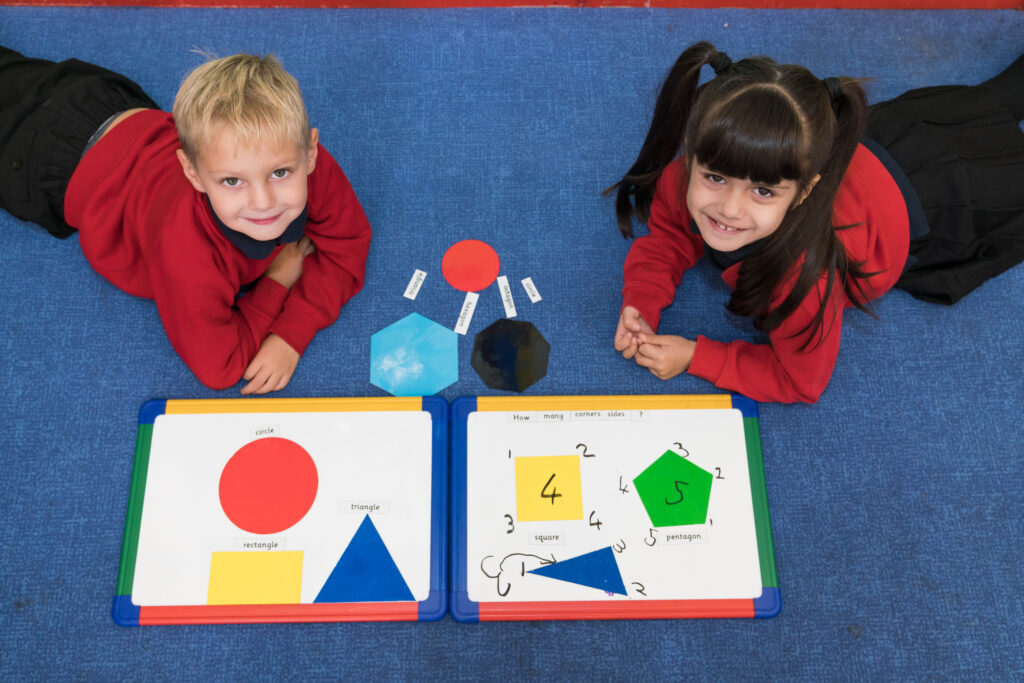

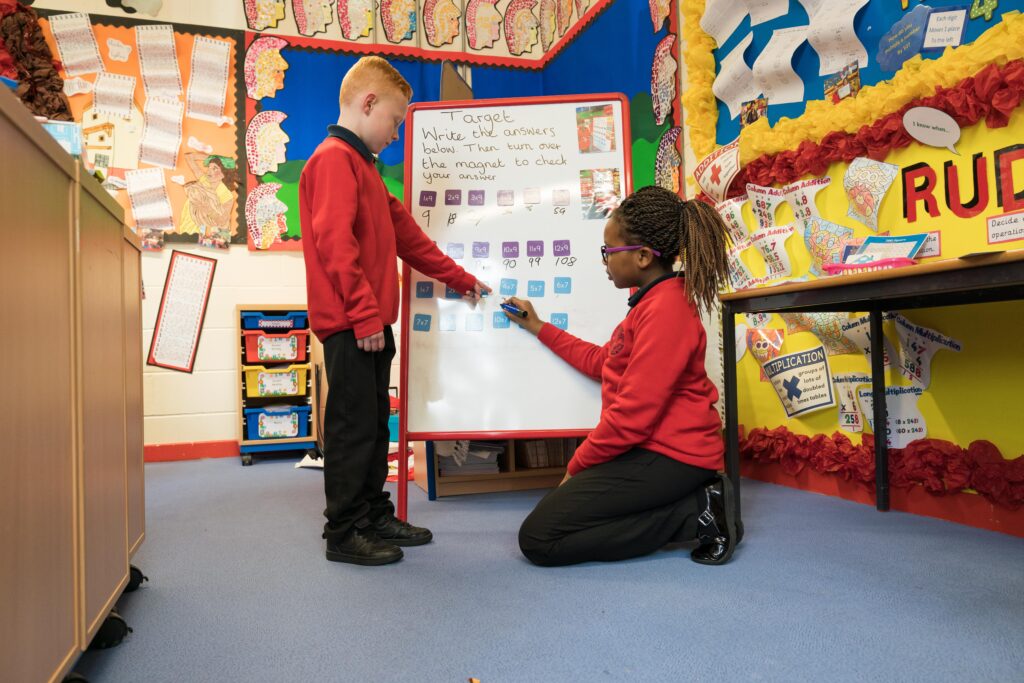
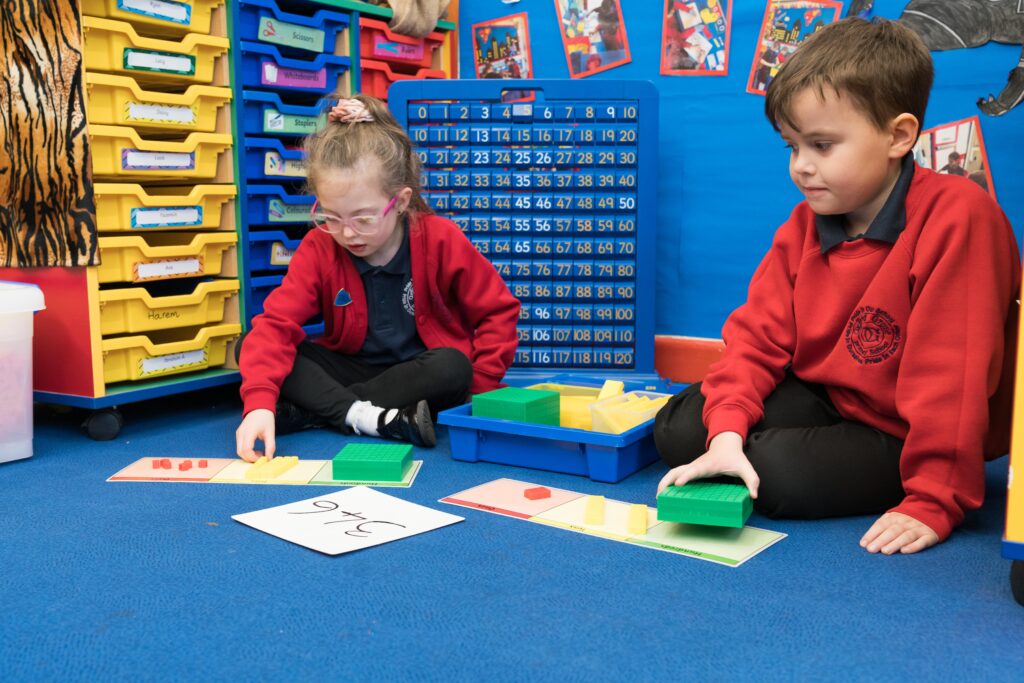
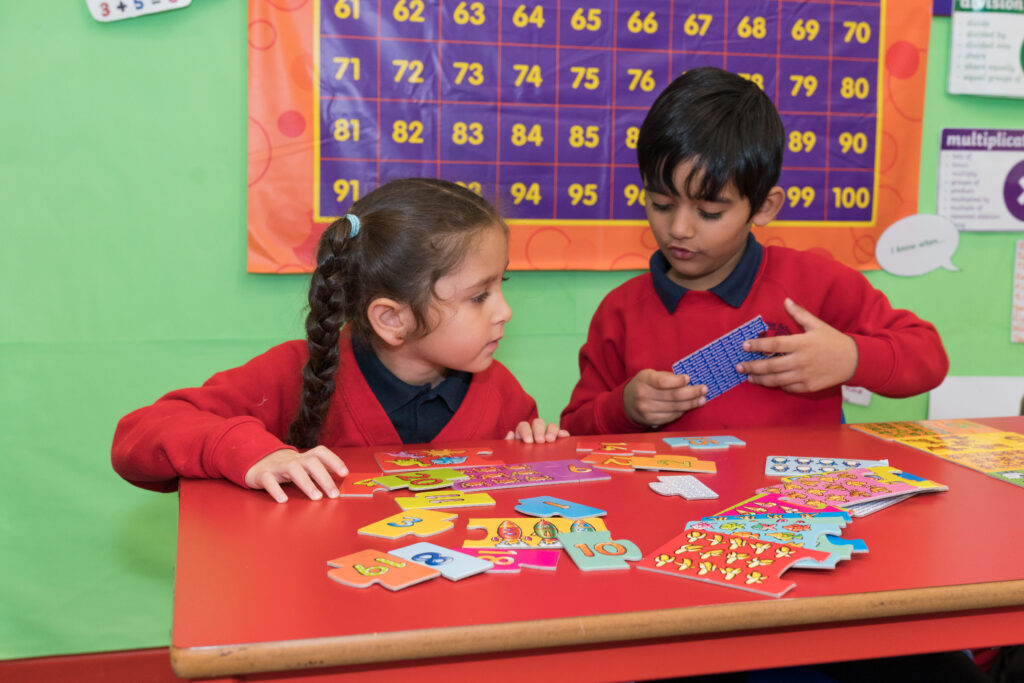


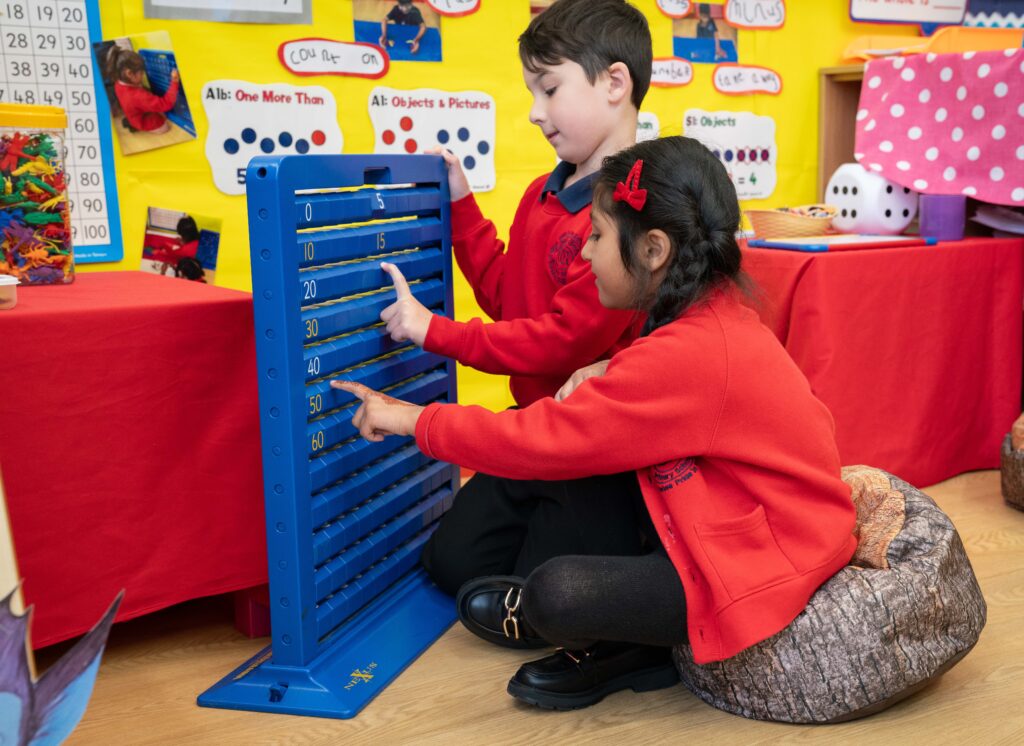
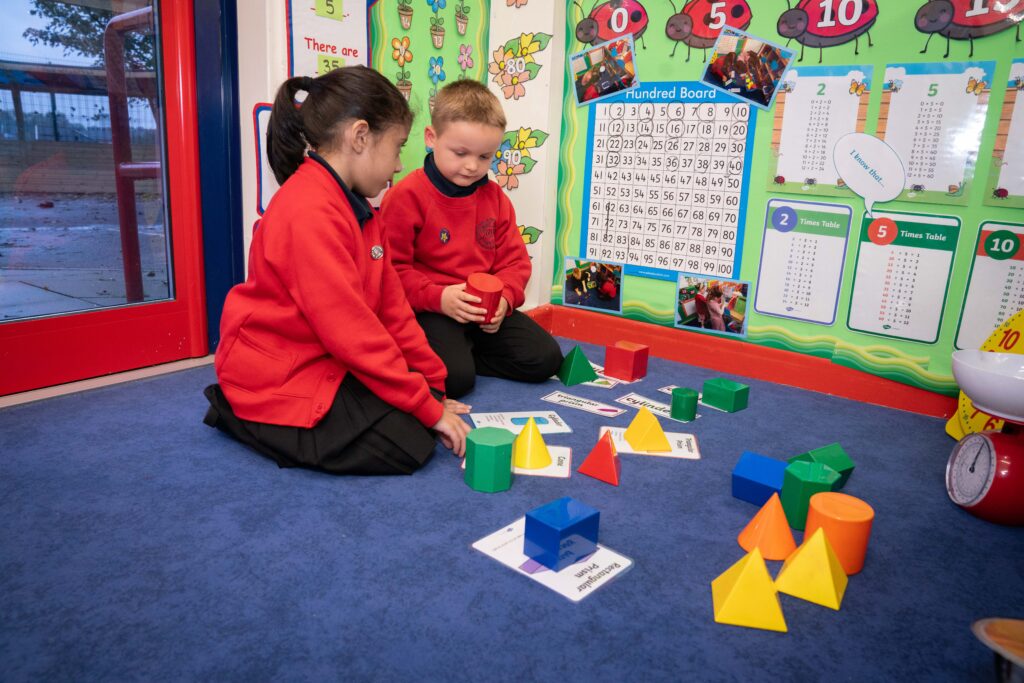
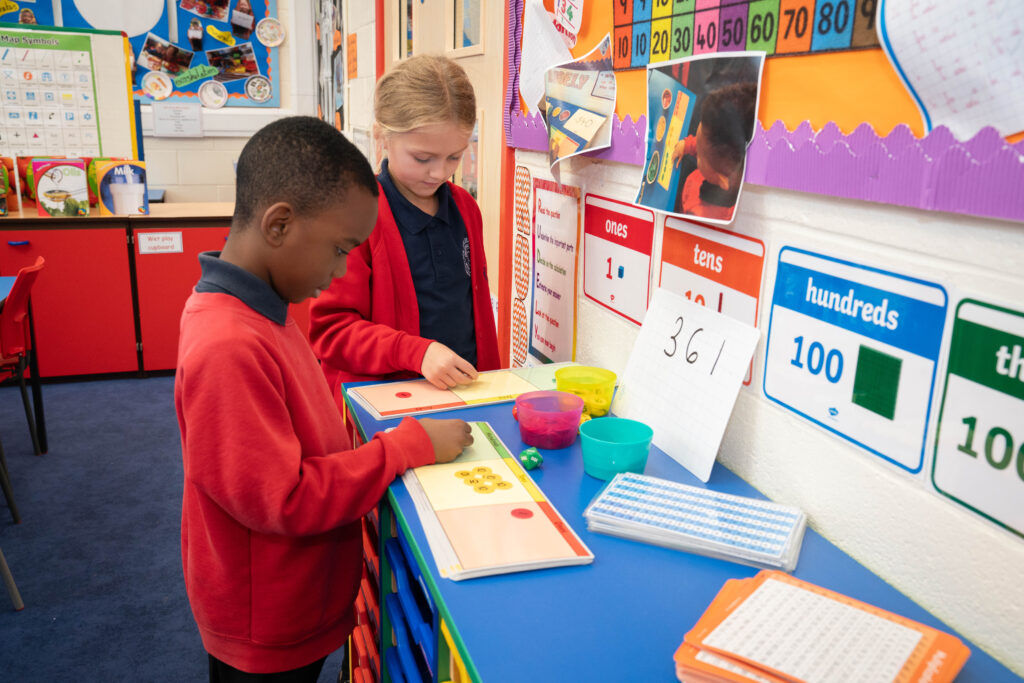
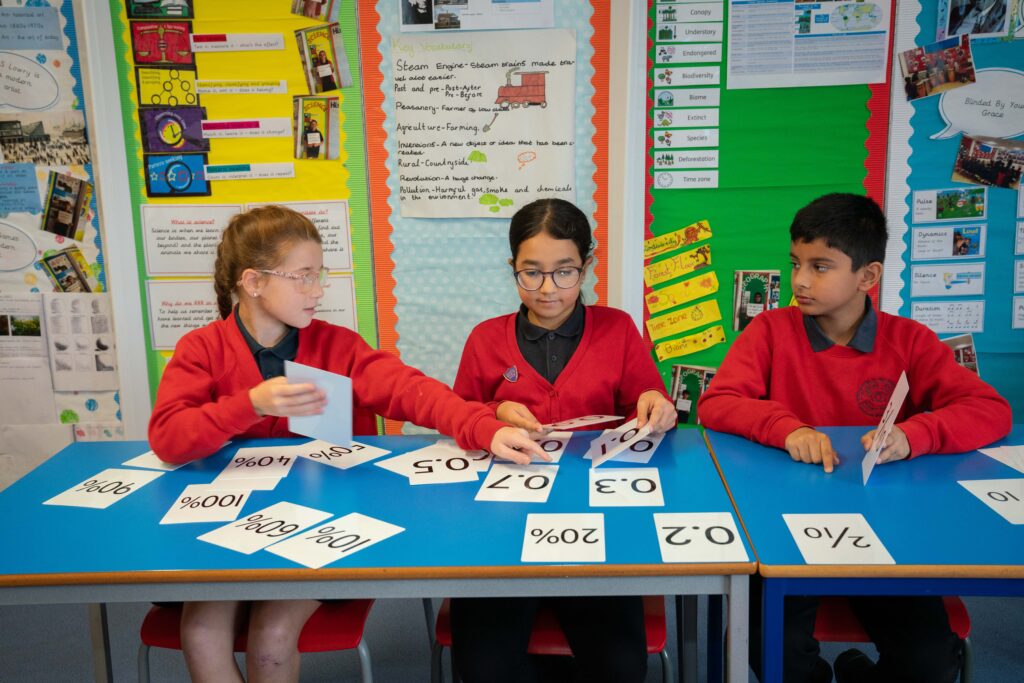
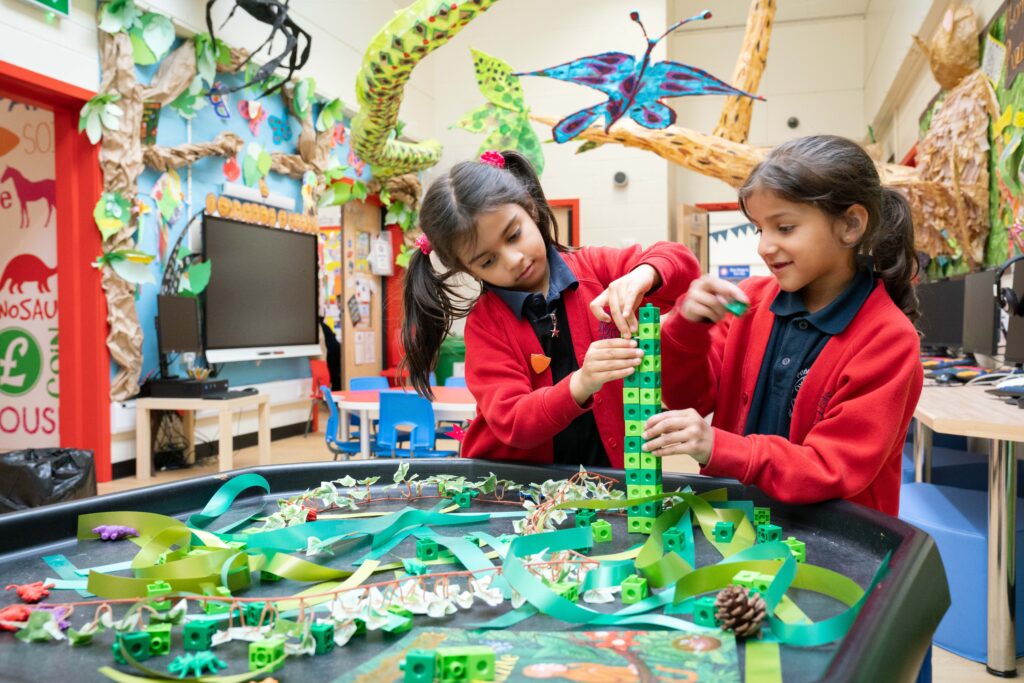
At Oxford Grove, we encourage every child to have ‘Pride in Our School – Pride in Ourselves – Pride in Each Other’. This ethos underpins our commitment to providing every child, including those who are disadvantaged or have special educational needs and disabilities (SEND), with the foundational knowledge and skills required to become confident, capable and proficient mathematicians. We believe that mathematics is a universal language that enables us to understand, interpret and make sense of the world around us. Our ambitious and inclusive mathematics curriculum is designed to equip every child with the mathematical knowledge, skills and understanding they need to succeed at every stage of life. From one key stage to the next, through their teenage years and into adulthood, we strive to ensure that every child is prepared to apply their mathematical learning with confidence in everyday situations, further education and future employment.
We recognise that mathematical proficiency opens doors to future opportunities. Through our carefully sequenced curriculum and Oxford Grove’s Exceptional Teaching and Learning Approach, we aim to inspire a lifelong appreciation of mathematics by building secure foundational knowledge and skills. Our high-quality mathematics curriculum is carefully sequenced to ensure that children systematically acquire and retain the foundational knowledge and skills essential for mathematical proficiency. By carefully sequencing mathematical content into small, manageable steps, we enable children to build upon their prior knowledge, establish meaningful connections and develop the confidence to apply their learning independently. Through our RRR (recap, revisit and remember) approach, children are given regular opportunities to systematically recall and practise core declarative and procedural knowledge. As Ofsted states in its mathematics subject report, Coordinating Mathematical Success (2023) ‘The need for overlearning is important.’ Through this approach, children become more fluent in recalling and applying essential mathematical knowledge, they are increasingly able to focus their attention on reasoning and solving more complex problems. Our teaching explicitly connects new learning to prior knowledge, enabling children to recognise mathematical relationships and understand how familiar facts and methods can be used in increasingly sophisticated ways.
Ultimately, we believe that every child is entitled to access an ambitious mathematics curriculum and experience success as a mathematician. We recognise that children enter each stage of their mathematical education with different experiences, levels of prior knowledge and individual learning needs. Through adaptive teaching, we ensure that our mathematics curriculum remains ambitious, inclusive and accessible to all learners, including those who are disadvantaged or have SEND. Adaptive teaching is embedded within our Exceptional Teaching and Learning Approach and is underpinned by high expectations for every child.
The relationship between mathematical learning and executive functioning is of high importance. Our mathematics curriculum is designed to support children in developing these essential cognitive skills while recognising that children may require different levels of support to manage the demands of mathematical learning.
We understand that when children are required to devote significant mental effort to recalling basic mathematical facts or methods, they may have less working memory available to understand new concepts, reason mathematically or solve unfamiliar problems. We therefore prioritise the secure acquisition of foundational knowledge and skills, ensuring that children develop fluency and automaticity through regular retrieval, rehearsal and purposeful practice.
Through our ambitious curriculum, adaptive teaching and Oxford Grove’s Exceptional Teaching and Learning Approach, we strive to ensure that every child develops the foundational knowledge and skills to know more, remember more and apply more, enabling them to take pride in themselves, pride in each other and pride in their mathematical achievements.
Mathematics Enrichment
Times Tables Tutors – sharing their knowledge with younger children to help them learn the times table facts (declarative knowledge)












The declarative knowledge of times tables is imperative to a success and fluency in this fundamental skill allows children to because secure mathematicians. Times Tables Tutors work regularly during the week with children in Year 3 and Year 4 for extra support to help them to learn their times tables. Tutors practise counting in steps and chanting the times table first, before moving on to rapid recall of mixed multiplication facts, and then finally working out and recalling the related division facts.
Responsibilities:
• Supporting peers in learning times tables facts
• Providing support with quick recall of times tables facts
• Assessing knowledge and recall of facts and giving rewards
Creating a love of Maths by providing a wide range of opportunities and real life experiences that increase children’s engagement and enthusiasm for Maths leading to greater success


At Oxford Grove, Maths is kept high profile through motivational competitions and inspirational workshops.
Examples of these include Times Table Rock Stars competitions, where children are able to compete to achieve in areas such as ‘Most Improved Performance’ and ‘Highest Effort’.
Our Maths-based workshops focus on using key facts and methods to independently solve real life problems. These include:
- CSI: Michaela Maths workshop and CSI: Storyland (Year 3 and 4) – focusing on recalling times table facts automatically
- Times Tables Trattoria (Year 3 and 4) – focusing on recalling times table facts automatically
- The Benefactor Workshop (Year 1 and 2) – focusing on counting in 2s 5s 10s and understanding coins
- Maths Escape Room (Year 5 and 6) – focusing on a range of maths problem solving
Interactive Maths areas to engage and challenge






Every classroom at Oxford Grove has a well-resourced Maths Area that children access throughout the week in order to practise the calculation methods they have been learning and to apply the mathematical facts to independent problem solving. A wide range of activities are planned for in order for our children to be inspired by maths and challenged to best support their progress.
Supporting parents and carers to help their children at home





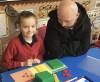

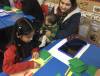
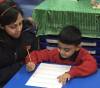




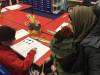


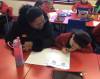
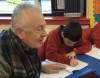

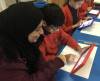
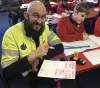


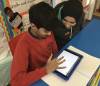
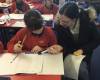
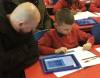
Each year, Oxford Grove holds workshops where parents and carers are able to come into school and watch their children take part in Maths lessons. The workshop starts with a presentation from Miss Jarvis Maths subject leader, and then parents and carers are able to join the lessons. During the lesson, teachers model the strategies used to teach a range of mathematical concepts and calculations. Parents and carers are then offered ways in which they can support their child with their Maths learning at home.
Our Maths Curriculum Leaders

Miss Jarvis
Maths Subject Leader

Mrs Wood
Maths Subject Link Governor

The school ensures that our Oxford Grove curriculum follows the national curriculum for mathematics which aims to ensure that all pupils:
- become fluent in the fundamentals of mathematics, including through varied and frequent practice with increasingly complex problems over time, so that pupils develop conceptual understanding and the ability to recall and apply knowledge rapidly and accurately
- reason mathematically by following a line of enquiry, conjecturing relationships and generalisations, and developing an argument, justification or proof using mathematical language
- can solve problems by applying their mathematics to a variety of routine and non-routine problems with increasing sophistication, including breaking down problems into a series of simpler steps and persevering in seeking solutions.
Mathematics is an interconnected subject in which pupils need to be able to move fluently between representations of mathematical ideas. The programmes of study are, by necessity, organised into apparently distinct domains, but pupils should make rich connections across mathematical ideas to develop fluency, mathematical reasoning and competence in solving increasingly sophisticated problems. They should also apply their mathematical knowledge to science and other subjects.
